Art therapy is a mental health profession that enriches the lives of individuals, families, and communities through active art making, creative process, applied psychological theory, and human experience within a psychotherapeutic relationship. Art therapy is particularly effective during times of crisis, changes in circumstance, trauma, and grief.
1. Emotional Expression
These activities help participants externalize feelings and develop insight:
- Draw Your Feelings: Use colors, lines, and shapes to represent current emotions without worrying about precision
- Emotional Color Wheel: Assign colors and patterns to different emotions to build emotional vocabulary
- Anger Volcano or Worry Jar: Represent stress or anger visually to process and release tension safely
- Inside-Outside Mask: Decorate a mask to show the face you present to the world versus inner emotions
2. Relaxation and Mindfulness
Activities that promote flow, calmness, and focus:
- Mandala Creation and Coloring: Use circular patterns to encourage meditative and mindful states
- Music-Guided Painting: Paint in response to music to release stress and connect with emotional energy
- Scribble and Zentangle Drawing: Transform random lines into meaningful art while practicing mindfulness
- Blind or Large-Scale Drawing: Engage physical movement for stress release and intuitive expression
3. Self-Discovery and Identity
Designed to explore personal values, past experiences, or future goals:
- Self-Portrait Exploration: Abstract or symbolic self-portraits reveal inner emotions and self-perception
- Life Timeline or Visual Autobiography: Map key moments of life to reflect on growth and experiences
- Collage of Joy or Vision Board: Use images and words to identify sources of happiness or goals
- Coat of Arms or Identity Collage: Create visual symbols representing strengths, roles, or values
4. Trauma, Loss, and Healing
Activities that support processing difficult emotions and experiences:
- Safe Place Visualization: Draw or paint spaces that evoke calm and safety
- Mini-Dioramas or Memory Boxes: Represent significant life events or personal grief in physical or visual form
- Depression or Anger Monsters: Externalize inner struggles to gain perspective and control
- Art Journaling through Loss: Blend writing and visual art to navigate grief and emotions
5. Sensory and Tactile Engagement
Exercises that involve hands-on exploration for emotional regulation and grounding:
- Clay or Play-Dough Sculpting: Shape emotions like sadness, anger, or stress into 3D forms
- Softness Collage: Use different textures and materials to create comforting art
- Finger Painting or Sand Drawing: Engage touch to increase mindfulness and relaxation
6. Miscellaneous and Creative Expansions
- Art Journaling: Daily visual reflection to track mood and personal insights
- Photography of Beauty: Capture elements of the environment that evoke positive emotions
- Expressive Storytelling or Comic Strips: Externalize experiences and challenges through narrative art
- Digital Art, Knitting, or Weaving Projects: Alternative forms integrating creativity with sensory and cognitive engagement
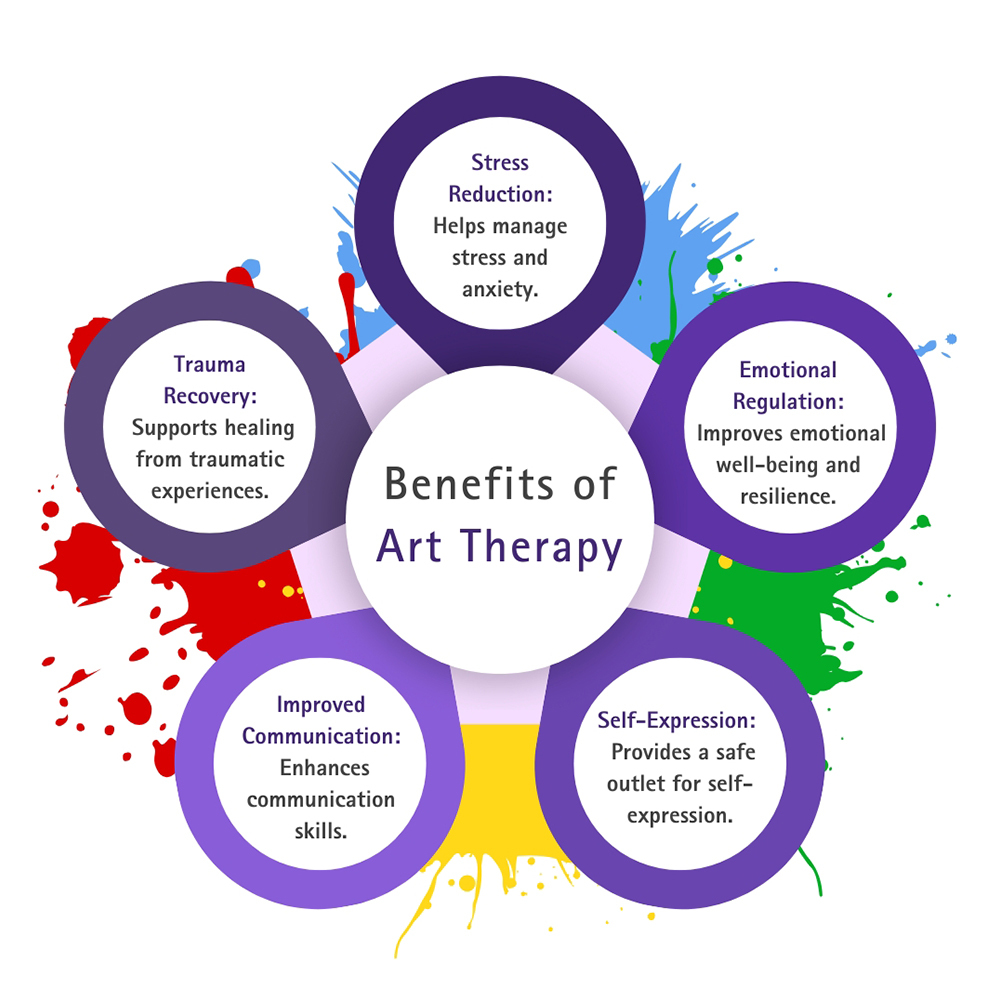
Benefits Of Art Therapy
- Art therapy uses creating art to help people express emotions and improve mental health.
- You don’t need to be good at art to start art therapy.
- Art therapy can help with problems like anxiety, depression, and PTSD.